Condemned to Be Remembered
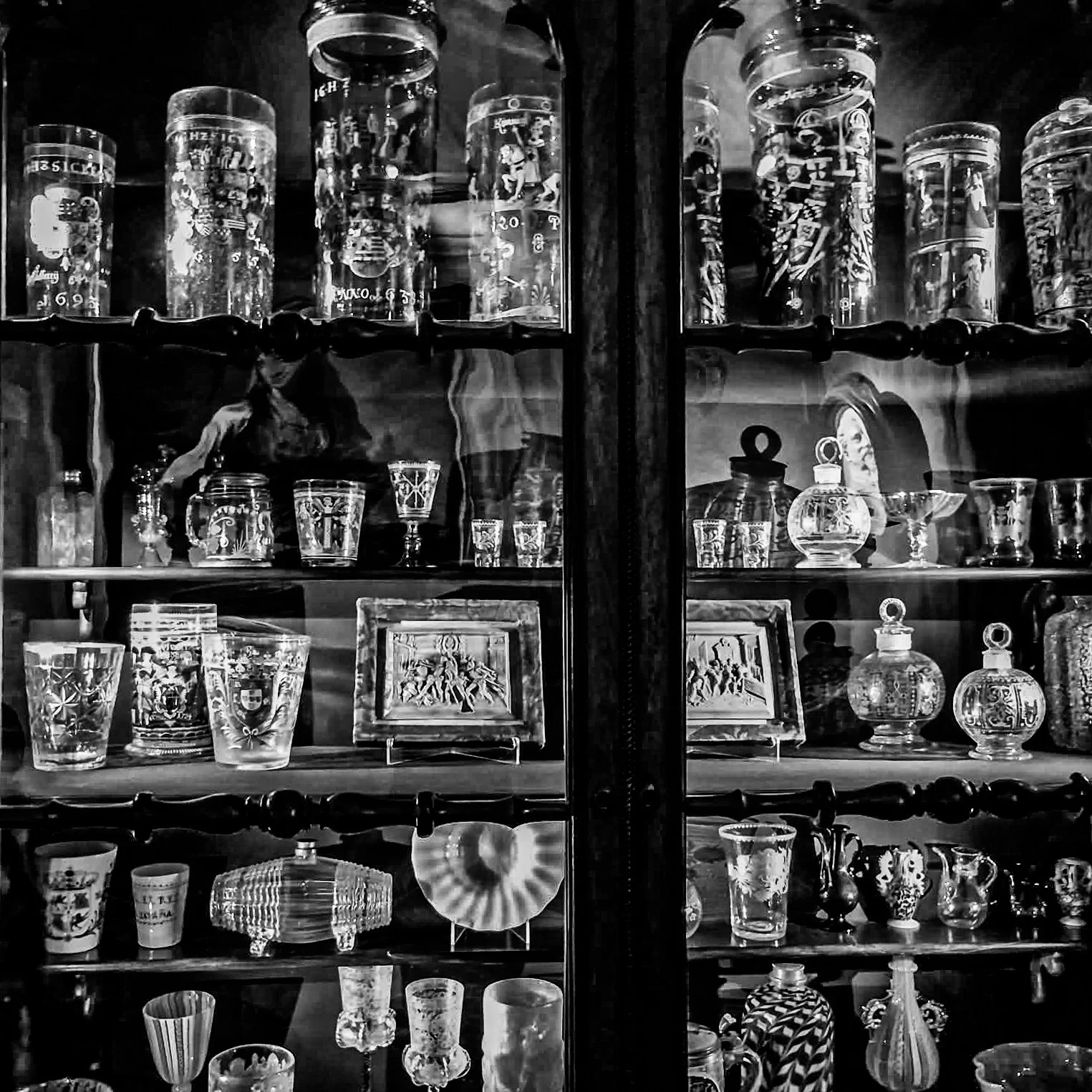
Condemning the Past
A display case of the past. Objects that were once useful to their owners — kings and emperors, most likely. A palace in Portugal, and hundreds of people walking past them every day. And yet even now, some people choose to exorcise their own past: to chase it off, and finally erase it from their lives.
A psychologist would smile at that. You cannot erase a past. The circuits that hold it are stubborn things — new neurons and new circuits can be laid over them, but the old ones are never condemned.
So what is the past of these objects? What is their root, their ugly karma, that they should live for centuries without the mercy of oblivion, reliving the same memory again and again? What keeps them from the eternal sleep of the formless — from the transformation of matter, from reincarnation in its most literal sense?
Like these objects, some people are condemned to the past. Don't misunderstand me: I don't mean that they remember obsessively, almost psychotically. I mean that they will be remembered — constantly, and for as long as anyone is left to remember.
Perhaps posthumous fame is the real reason we create, produce, build temples and statues. And perhaps it is nothing more than an illusion that promises us eternal life.
A life that was actually lived, one that sowed good seed, reaps a good harvest — and carries those tools into whatever comes next. This isn't religion. It's dolce far niente, camouflaged inside a heavier idea: death.
The art of doing nothing once the work is finished is not the same as enjoying the work and wondering what to make next. When the work is done and you are enjoying it, you do think about the next thing — but not backwards. You think of it as a continuation. If, on the other hand, you are always thinking about the next one and the one after that, either you never made peace with the last one, or you have not accepted your own nature and your need to rest.
How fortunate these objects are, Midas thought, as he gathered his wealth and turned earth into gold with his hands. Then he grew hungry, and understood too late that what had to change was his relationship to the wealth itself. Posthumous fame works the same way. It has its place — in a family, in public life — but not to the point where it stops you eating.
Move on. Accept your past. Live. Yes: live, however paradoxical that sounds next to a case of dead objects.
Because perhaps the ultimate legacy is to stay here, now. To serve your purpose, your vision, your mission. Perhaps the ultimate legacy is to serve water — or wine, at best — and not to be sealed inside a display case.
Maybe.
